Best Online Courses To Become A Digital Marketing Specialist
Andy
|
March 9, 2026
You are likely staring at a dozen open tabs, feeling the pressure to pick a career path that actually pays the bills. Navigating the world of online education is exhausting when every guru promises a six-figure salary. You need a clear, no-nonsense roadmap to success.
Start Here: The Best Free Digital Marketing Courses For Beginners
If you are dipping your toes into the water, do not spend thousands of dollars yet. The industry moves so fast that some paid textbooks are outdated before they even hit the shelves. Instead, start with the heavy hitters that offer high-quality content for the low price of zero dollars.
The Google Digital Marketing Course (specifically the Fundamentals of Digital Marketing via Google Digital Garage) is the undisputed starting point. The Interactive Advertising Bureau Europe and The Open University accredit it. Over 26 modules, you'll cover everything from search engine optimization (SEO) to email marketing. It's interactive, uses real-world examples, and gives you a solid foundation without costing a dime.
Another powerhouse is the HubSpot Digital Marketing Certification. While Google focuses heavily on search and analytics, HubSpot is the king of Inbound Marketing. This course teaches you how to create content that draws people in naturally rather than shouting at them with ads. It's incredibly practical for anyone who wants to focus on content strategy, social media, or lead generation.
These two certifications are the bread and butter of your resume. When a hiring manager sees a HubSpot digital marketing certification or a Google badge, they know you speak the industry language. They are perfect for digital marketing for beginners because they don't assume you already know what a click-through rate is.
Stepping Up: Paid Online Digital Marketing Courses That Actually Matter
Once you have the basics down, you might feel like you're hitting a ceiling. Free courses are great for theory, but paid versions often provide the how-to at a much deeper level.
If you're looking for a digital marketing course that carries academic weight, look into the Google Digital Marketing & E-commerce Professional Certificate on Coursera. Unlike the free version, this is a multi-month program designed to get you job-ready. You'll learn how to use tools like Canva, Hootsuite, and advanced Google Ads Manager. It costs a monthly subscription fee (usually around $39), but the hands-on projects are what will actually help you build a portfolio.
For those who prefer a more business-school vibe, the Digital Marketing Specialization by the University of Illinois (also on Coursera) is fantastic. It's less about which buttons to click and more about the consumer's psychology. This is where you start transitioning from a junior helper to a true digital marketing specialist.
The Digital Marketing Bootcamp: Is The High Price Tag Worth It?
Sometimes, self-paced learning isn't enough. You might be the type of person who needs a deadline, a teacher, and peers to stay motivated. This is where a digital marketing bootcamp comes into play.
Bootcamps like those offered by General Assembly, Noble Desktop, or BrainStation are intensive. They usually last 10 to 12 weeks and can cost anywhere from $3,000 to $15,000.
Why consider a bootcamp?
- Live Instruction: You can ask questions in real-time.
- Networking: You meet people who are already working in the field.
- Career Services: Many bootcamps offer resume reviews and mock interviews.
However, be careful. A boot camp is a massive investment. If you are a self-starter who can learn from a $15 Udemy course, a $10,000 bootcamp might be overkill. Only choose this route if you specifically need the structural push and the direct line to a career coach.
How To Become A Digital Marketing Specialist: Your 4-Step Learning Path
You don't just wake up and become a specialist. It's a ladder. If you try to learn everything at once, you'll burn out in a month. Here is a realistic path to follow:
Step 1: The Generalist Phase
Complete the Google Digital Marketing course. This gives you the big picture. You'll learn a little bit about SEO, a little bit about ads, and a little bit about social media. At this stage, your goal is to find out what you actually enjoy doing.
Step 2: The Certification Phase
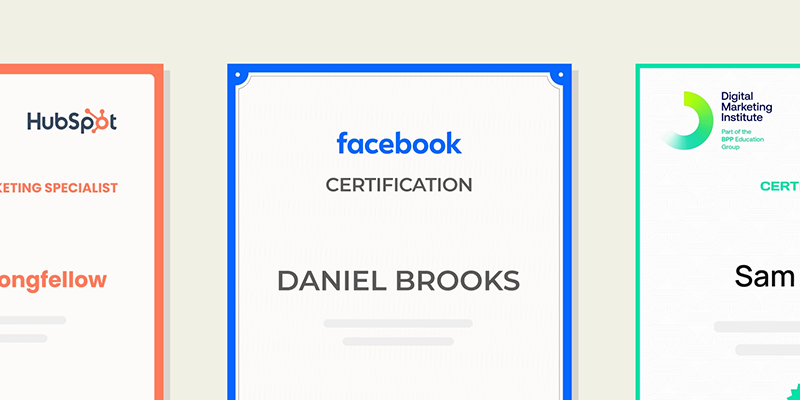
Grab your digital marketing certification from HubSpot or Meta. These prove to employers that you have specialized knowledge in modern platforms. Meta's Social Media Marketing Professional Certificate is particularly well-suited if you're drawn to Instagram and Facebook advertising.
Step 3: The Dirty Hands Phase
This is where most people fail. They keep taking courses but never actually do anything. Start a blog, run a tiny $50 ad campaign for a friend's business, or offer to manage the social media for a local non-profit. Real-world data is the best teacher you will ever have.
Step 4: The Specialist Phase
Now you pick a niche. Do you love numbers? Become a PPC (Pay-Per-Click) expert. Do you love writing? Become a Content Marketing Specialist. Do you love technical puzzles? SEO is your home. A digital marketing specialist earns more because they solve specific, high-value problems.
Comparing The Top Courses: Which One Should You Pick?
Choosing the best digital marketing courses depends entirely on your current bank account and your end goal. Let's break it down:
- Best for the Budget-Conscious: Google Digital Garage (Free). It's the gold standard for a reason. No cost, high recognition.
- Best for Career Switchers: Coursera's Google Professional Certificate. It's affordable but structured enough to feel like a real school program.
- Best for Content Lovers: HubSpot Academy. Their video production is top-tier, and the templates they provide are actually useful in real-world jobs.
- Best for Fast Results: A high-rated online digital marketing course on Udemy (look for Seth Hymes or Phil Ebiner). These are often no-fluff and get straight to the technical setup.
If you are looking for a job tomorrow, focus on the certifications that are currently in demand on LinkedIn. Search for 'Digital Marketing' in the jobs section and note which tools they mention. If every Google Analytics requirement is met, that is your signal to obtain that specific certificate.
Beyond The Course: Building A Portfolio That Gets You Hired
Let's be honest: a certificate is just a piece of digital paper. To get hired as a digital marketing specialist, you need to show, not just tell.
While you are taking your online digital marketing course, document your progress. If you learn how to do keyword research, save the spreadsheet you created. If you learn how to design a Facebook ad, save the graphic and the copy you wrote. Put these into a simple Google Site or a Canva presentation.
When you sit down for an interview, being able to say, I used the techniques from my digital marketing certification to grow this small Instagram account by 20%, is worth more than a hundred certificates. Employers want to see that you can take a concept and turn it into a result.
Final Advice For Your Journey
The perfect course doesn't exist because the platforms change every week. Don't get stuck in learning mode forever. Pick one of the best digital marketing courses mentioned above, finish it, and then immediately try to apply one thing you learned. Whether you choose a high-intensity digital marketing bootcamp or a self-paced digital marketing course, the secret is consistency.
Related Posts

What Is A Front-End Engineer And How To Become One

Best Online Courses To Become A Video Editor And Start Earning

Top Cybersecurity Courses Employers Actually Value

Web Development Courses That Lead To Freelance Jobs

Online Business Courses That Actually Help Beginners Succeed