What Is A Front-End Engineer And How To Become One
Andy
|
March 11, 2026
Staring at a blank code editor feels overwhelming when you want to build websites but don't know where to start. Let's cut the confusion. Here is your exact, step-by-step roadmap to mastering the right tools and landing your first tech job.
What a Front-End Engineer Actually Does
A front-end engineer takes a static design file and turns it into a living, clickable, scrolling website. You handle everything the user sees and interacts with in their browser. Think about drop-down menus, image carousels, pop-up forms, and page loading animations.
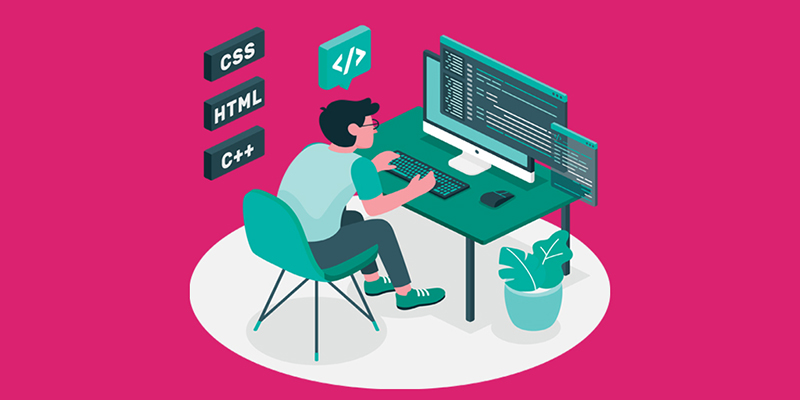
This specific type of work is often called UI development. While backend developers stay busy managing hidden databases and server logic, you manage the direct user experience. If a button looks wrong on a mobile phone, it is your job to fix it.
Front End Engineer Salary Expectations
Let's talk money quickly, because the financial upside of this career is a major draw. Every business needs a web presence to sustain high demand.
In the United States, an entry-level front-end engineer's salary typically ranges from $70,000 to $85,000 per year. Once you gain a few years of experience and hit mid-level or senior status, six-figure salaries ($110,000 to $150,000+) are standard. Remote work options are also everywhere, meaning you can often earn a big-city salary while living in a cheaper area.
The Core Foundations: HTML, CS, S JavaScript
Before you touch fancy frameworks, you must master the core trio of the web. Do not rush this part. Every advanced tool you will learn later is just a different way of writing these three languages.
HTML (The Skeleton)
This gives your page structure. You will learn how to place text, images, and links on a page.
Practical tip: Don't just memorize tags. Focus heavily on semantic HTML (using tags like ` `, ``, and ``) because it helps screen readers and improves SEO. Also, learn how to build solid, working input forms.
CSS (The Paint And Interior Design)
CSS makes your plain HTML look good. You will use it to add colors, fonts, spacing, and layout rules.
Practical tip: Spend 80% of your CSS study time mastering Flexbox and CSS Grid. These are the two tools you will use every single day to align items. You also need to study responsive web design in depth. Your websites must look just as perfect on a tiny iPhone as they do on a massive desktop monitor. Use media queries to shift your layouts based on screen size.
JavaScript (The Brain And Muscle)
This is your first real programming language. JavaScript makes the website do things. It performs calculations, fetches data, and updates the page without requiring a refresh.
Practical tip: Focus on DOM manipulation (changing HTML/CSS with code), array methods (like `.map()`, `.filter()`, and `.reduce()`), and fetching data from third-party APIs.
Leveling Up: Becoming A React Developer
Nobody builds complex web applications with plain HTML, CSS, and JavaScript anymore. It takes too much time, and the code gets messy quickly. Instead, companies use modern frameworks to speed up the process.
Right now, React is the absolute industry standard. If you want to get hired as a front-end developer as fast as possible, you need to learn React. It allows you to build reusable UI components. For example, instead of writing the code for a Submit button 50 times across a site, you write it once in React and reuse it everywhere.
To become a hirable React developer, focus entirely on modern functional components. Skip the older class components you might see in tutorials from five years ago. You need to understand intimately:
Props: How to pass data between components.
UseState: How to manage data that changes (like a counter or text input).
UseEffect: How to run code when a component loads, like fetching weather data from a server.
React Router: How to navigate between different pages in your app without reloading the browser.
The Exact Learning Order To Avoid Burnout
Learning to code is a marathon. If you try to learn JavaScript arrays on the same day you are learning CSS colors, your brain will shut down. Follow this linear path:
Phase 1: Structure & Style (2 to 3 weeks)
Focus solely on HTML and CSS. Build static pages. Clone the homepage of your favorite coffee shop or a simple blog. Do not add any functionality yet. Just make it look right.
Phase 2: Logic (4 to 6 weeks)
Put CSS aside for a moment and dive into plain JavaScript. Build logic-based tools. Make a stopwatch, a random quote generator, or a simple tip calculator.
Phase 3: The Framework (4 to 6 weeks)
Bring it all together with React. Start building single-page applications.
Phase 4: Git And GitHub (1 Week)
You need to know how to save your code in versions and share it with others. Learn basic terminal commands to push your code to GitHub. Employers will look at your GitHub profile to see if you are actively writing code.
Practical Project Ideas For A Junior Front-End Developer
Tutorials will trick you into thinking you know how to code. You watch a video, type what the instructor types, and everything works. But the moment you start a blank file on your own, you freeze.
You only learn by building. As an aspiring junior front-end developer, skip the generic to-do list projects. Recruiters have seen ten thousand of them. Build things that solve specific problems and look like real software.
Project Idea 1: A Movie Search Database
Use a free data source, such as the TMDB API. Build an app that lets users search for a movie, view the poster and cast, and save their favorites to a local list. This proves you know how to talk to external servers and manage data states.
Project Idea 2: An E-commerce Checkout Flow
You don't need a real backend for this. Build a storefront with a product grid. Allow the user to add items to a cart. The cart should slide out, automatically update the total price, let the user change quantities, and let them remove items. This proves you can handle complex user interactions.
Project Idea 3: A Dashboard with Charts
Use a free charting library (like Chart.js) to display fake sales data or fitness-tracking stats. Make it look sleek with a sidebar menu and a dark mode toggle. Dashboards are widely used in corporate environments, which shows you can build business tools.
Make sure every single project you build is fully responsive. Broken layouts on a mobile screen will instantly ruin your chances with a hiring manager.
Building A Portfolio That Gets Interviews
Your portfolio is your actual resume in the tech industry. Don't spend two months building an overly animated, confusing portfolio site. Keep it clean, fast, and easy to read.
List your 3 to 4 best projects. For each project, you must include two things:
1. A Live Link: Use free hosting services like Vercel or Netlify. A recruiter is not going to download your code to see what it does. They want to click a link and see it work instantly.
2. A GitHub Link: For the senior developers who want to look under the hood at your code quality.
Under each project, write three bullet points explaining why you chose the tech stack, what specific problem you solved, and one bug you had to figure out. This shows you can communicate technically.
Job Hunting Tactics For Your First Tech Role
Sending 500 identical resumes to generic job boards usually results in silence. You are competing against thousands of other beginners. Try a more direct approach.
Target local non-tech businesses or smaller marketing agencies first. A local agency building sites for dentists and plumbers is often much more willing to take a chance on a beginner than a massive software company.
Message tech recruiters directly on LinkedIn. A simple note saying, Hi, I just built this React e-commerce site and noticed you are hiring for a junior role. I'd love to show you that my work goes a long way. It proves you are a real human who actually builds things.
From Frustration To Flexibility
Becoming a front-end engineer takes time, patience, and a lot of typing through frustrating error messages. But the payoff is a creative, highly flexible career that you can do from a laptop anywhere. Stick to the basics, build projects that force you to think, and put your work out there. Stop reading articles now. Open your code editor and start writing your first line of HTML today.
Related Posts

How to Learn Product Research Skills for E-Commerce Success

Beginner-Friendly Python Coding Course: Learn to Code Step by Step

6 Best Platforms For Professional Online Learning

Best Graphic Design Courses For Freelancers In 2026

16 Best Online Courses That Lead To High-Paying Jobs