Best Online Courses For Learning Web Development From Scratch
Andy
|
February 26, 2026
Staring at hundreds of coding tutorials usually leads to decision paralysis rather than actual coding. We cut through the noise to bring you the exact roadmaps, courses, and project ideas you need to go from a blank screen to a hired developer. Let's get building.
The Absolute Beginner's Path: Where To Start
Before you touch servers or databases, you need to understand how a basic webpage works. The foundation of web development for beginners relies entirely on three tools: HTML (structure), CSS (styling), and JavaScript (action).
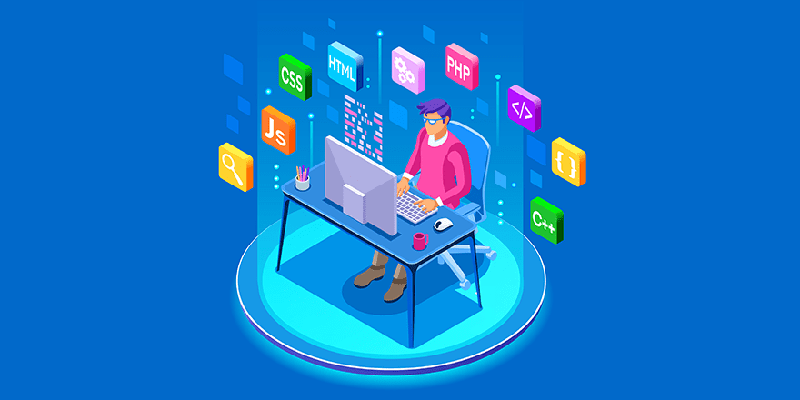
Taking a dedicated HTML, CSS, and JavaScript course is your mandatory first step. It builds your muscle memory for writing syntax and shows you immediate, visual results in your browser. According to the annual Stack Overflow Developer Survey, JavaScript remains the most commonly used programming language worldwide, making it a non-negotiable skill.
Focus entirely on these three languages for your first few weeks. Skip the fancy frameworks for now. Mastering the raw basics makes everything else you learn later ten times easier to grasp.
Frontend Development Courses For Visual Thinkers
If you enjoy making things look good, run smoothly, and react instantly to user clicks, the frontend is your space. A solid frontend development course will take your raw HTML/CSS/JS skills and introduce you to modern industry standards, such as React or Vue, as well as CSS frameworks like Tailwind.
Here are the most practical options available right now:
1. Jonas Schmedtmann's Complete JavaScript Course (Udemy)
This is arguably the best online web development course for mastering JavaScript. It is massive, but Jonas forces you to build real applications—like a map-based workout tracker and a modern recipe application—instead of just copying text. You learn the why behind the code, which is crucial for passing technical interviews.
2. MeFrontendEnd Developer Professional Certificate (Coursera)
Taught by actual Meta engineers, this certificate gives you a highly structured path straight into React. It covers exactly what massive tech companies expect junior developers to know, including version control with Git, user interface design principles, and how to write clean, reusable components.
Frontend Masters (Subscription)
Once you finish your beginner courses, grab a month or two of Frontend Masters. Think of it as Netflix for serious developers. They offer incredibly detailed courses on CSS Grid, web accessibility, and performance optimization. It is where you go to turn from a junior developer into a mid-level developer.
Master the Engine: Back-End Learning Resources
Prefer logic, data, and making things work behind the scenes? Back-end development focuses on servers, APIs, and databases. While there are countless web development courses out there, you only need to pick one language to start building the engine of your websites.
Node.js Route:
If you already know JavaScript for the frontend, stick with it. Look up NodeJS - The Complete Guide by Maximilian Schwarzmüller on Udemy. It seamlessly connects what you already know to server-side logic, teaching you how to build secure APIs and handle file uploads.
Python Route:
Python reads almost like plain English, making it highly approachable. 100 Days of Code: The Complete Python Pro Bootcamp by Dr. Angela Yu is fantastic. She guides you through building a strong back-end foundation using Flask and Django, eventually connecting your apps to SQL databases.
The Complete Package: Full Stack Web Development Bootcamps
Companies love developers who can handle database errors and fix user interface glitches. To learn web development from end to end, you are looking at full-stack web development.
According to the U.S. Bureau of Labor Statistics, employment for web developers is projected to grow 16% from 2022 to 2032, much faster than the average for all occupations. This high demand makes an intensive coding bootcamp online a very attractive option if you want a structured path to a new career.
1. The Odin Project (Free)
This is the gold standard for self-taught developers. It is entirely text-based, highly practical, and forces you to set up your own local developer environment from day one. You will learn either Ruby on Rails or Node.js alongside React. It is tough, and it won't hold your hand, but Odin Project graduates often enter the job market much more prepared than students who paid $15,000 for a traditional bootcamp.
2. FreeCodeCamp (Free)
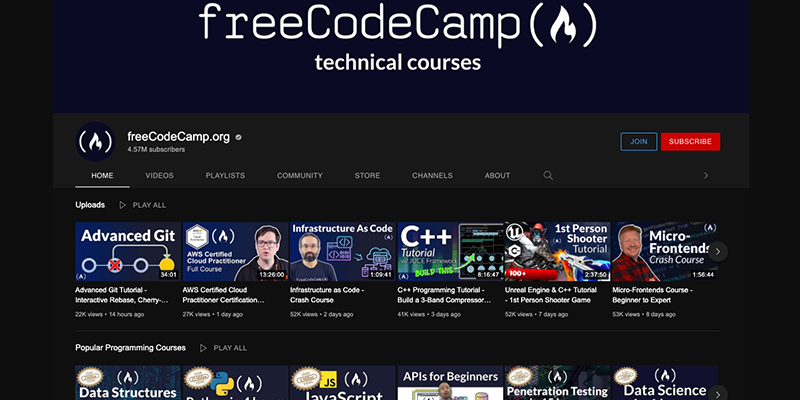
A massive, interactive platform where you type code directly into the browser. Earning their full-stack certifications takes around 3,000 hours, covering everything from basic HTML to complex API routing and information security. It is highly gamified, which keeps you motivated during the difficult stretches.
3. Springboard Software Engineering Bootcamp (Paid)
If you need a mentor holding you accountable, Springboard offers a comprehensive online curriculum with a job guarantee (read their terms, but it is a strong safety net). You get weekly one-on-one video calls with an industry expert. Having a senior developer review your code and tell you exactly what you did wrong drastically reduces the hours you spend stuck on frustrating bugs.
The Ideal Learning Order
It is tempting to jump straight to building the next big social media app. Don't. Follow this sequence to avoid burnout:
Step 1: HTML & CSS (Build static, good-looking pages).
Step 2: Basic JavaScript (Make buttons click, create drop-down menus).
Step 3: Advanced JavaScript (Fetch live data from weather or movie APIs).
Step 4: Frontend Framework (Learn React to build faster).
Step 5: Back-end basics and Databases (Learn to save user data permanently).
Build Real Projects: Moving Beyond Tutorials
Watching a video feels like progress, but it is often an illusion. You only truly learn when the video is off, and you are staring at a broken layout or a red error message. Break out of the tutorial loop by building things you actually care about.
Instead of another generic to-do list, build a fan site for your favorite band, a tracker for your daily expenses, or a tool that solves a specific annoyance at your current job. Push all your code to GitHub so employers can see your commit history. An ugly application you built entirely on your own is worth infinitely more to a hiring manager than a perfect application you just copied from a YouTube video.
Landing Your First Tech Job
Your portfolio is your new resume. Focus on having three high-quality, fully functioning projects rather than ten half-finished ones. Host them live using free tools like Netlify or Vercel so anyone can click a link and see your work. Connect with other developers on LinkedIn or at local meetups. Many junior roles are filled through direct referrals before they ever reach the public job boards.
Final Thoughts
Becoming a developer is a marathon, not a sprint. You will get stuck and feel overwhelmed. That is completely normal. Pick one platform—whether it is The Odin Project or a highly-rated Udemy course—and stick with it until the very end. Consistency beats raw talent every single time. Open your code editor, write your first line of code today, and watch how much your career can change in the next twelve months.
Related Posts
How To Learn SEO Online and Start Getting Clients In 2026
Best Online Courses To Become A Digital Marketing Specialist

Top Cybersecurity Courses Employers Actually Value

6 Best Platforms For Professional Online Learning

Best Graphic Design Courses For Freelancers In 2026