Best UX Design Courses for 2026: 10 Courses to Start Your UX Career
sana
|
February 16, 2026
User experience design is one of the most practical skills you can learn in 2026. It shapes how people move through apps, websites, and digital services, and it sits close to product work in almost every industry.
UX is not the same as UI. UX covers structure, flow, usability, and problem-solving, while UI handles the visual layer. A good UX course teaches you how to spot friction, test ideas, and improve how a product works for real users.
What Is User Experience (UX) Design?
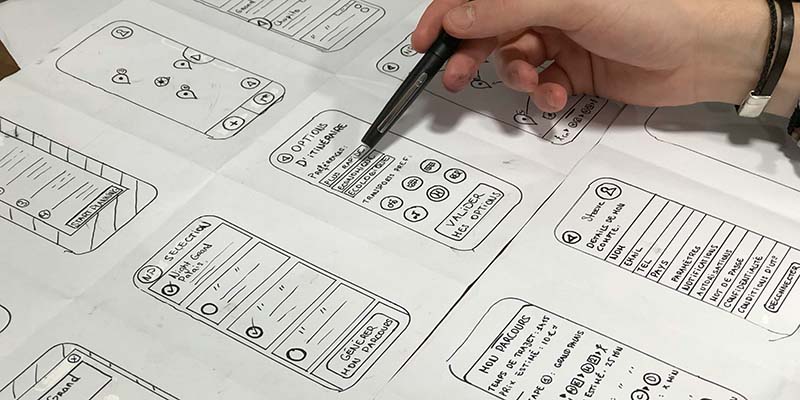
UX is the full experience people have when using a product or service. It includes research, information structure, task flow, wireframes, prototypes, and usability testing.
Good UX reduces confusion and helps users finish tasks faster. In 2026, that matters even more because users expect simple onboarding, clear navigation, and accessible interfaces across web and mobile products.
How to Choose the Right UX Course
- Match the course to your level.
If you are new, choose a structured beginner path that covers the full UX process. If you already know the basics, look for a specialization in research, interaction design, or portfolio improvement.
- Check what you will build.
Look for case studies, wireframes, prototypes, and portfolio pieces. A course that ends with only quizzes or lectures is usually weaker for career use.
- Review the support system.
Mentorship, critique, instructor feedback, and deadlines matter. If you learn better with structure, choose a course with live sessions or clear project review.
How These UX Courses Were Selected
These courses come from major global learning platforms and established UX training providers. The list favors practical UX coverage, project-based learning, credible instructors, and a mix of research, design, interaction, and mobile-focused options.
Top 10 UX Design Courses to Take in 2026
1. Google UX Design Certificate
This is one of the strongest beginner UX programs. It covers user research, empathy mapping, wireframing, prototyping, and testing in a clear sequence.
It is especially useful if you want a guided path from zero to a first portfolio.Link: https://www.coursera.org/professional-certificates/google-ux-design
2. UX Academy
UX Academy is a mentor-led program for learners who want direct feedback and stronger career support. It focuses on research, information architecture, interaction design, and portfolio building.
It suits career switchers who want accountability, review, and a more guided learning path.Link: https://designlab.com/ux-academy
3. UX/UI Design Live Bootcamp
A live bootcamp works well if you want classroom-style structure. These programs usually include scheduled sessions, guided practice, critiques, and deadlines.
That format helps if you learn better with live instruction than with self-paced study.Link: https://generalassemb.ly/education/user-experience-design-bootcamp
4. UX Design Nanodegree
A Nanodegree-style program is project-heavy and career focused. It usually combines UX methods with capstone work, so you finish with something concrete for your portfolio.
It is a good middle ground between a bootcamp and a self-paced certificate.Link: https://www.udacity.com/course/ux-designer-nanodegree--nd578
5. UI/UX Design Specialization
This is a solid academic-style option for beginners. It often covers UX foundations, design thinking, and usability testing across multiple modules.
It works well if you want broad coverage before moving into deeper practice.Link: https://www.coursera.org/search?query=ui ux design specialization
6. UX Research & Design Program
This path is better if you care more about users than visuals. It focuses on interviews, observation, surveys, usability testing, and analysis.
That makes it a strong fit for future UX researchers or product designers who want stronger research skills.Link: https://www.coursera.org/search?query=ux research design
7. Interaction Design Specialization
Interaction design is about how users move through a product step by step. A course in this area usually covers flow, feedback, state changes, and prototyping.
It is more useful once you already understand basic UX terms and want deeper skill.Link: https://www.interaction-design.org/courses
8. UX Design Principles Course
This is a short course for a fast start or refresher. It usually covers usability basics, common mistakes, and the main ideas behind good digital experiences.
It is useful if you want to test your interest before committing to a longer program.Link: https://www.interaction-design.org/courses/user-experience
9. UX for Web Design Course
Web UX training focuses on navigation, hierarchy, readability, forms, and page flow. That makes it practical for websites, landing pages, and product pages.
It is a good fit for people working in marketing, SaaS, e-commerce, or content-heavy web products.Link: https://www.udemy.com/topic/ux-design/
10. Mobile UX Design Course
Mobile UX is different because screens are smaller and interactions are touch-based. A good mobile course covers tap targets, thumb reach, onboarding, scrolling, and app task design.
If you want to work on apps, this is one of the most useful specializations you can study.Link: https://www.interaction-design.org/courses/mobile-ux-design
Free UX Learning Options
Free UX learning is useful if you want to explore the field before paying for a full program. Coursera often offers audit access, Interaction Design Foundation has some free materials and structured articles, and Figma offers design learning resources. Udemy also has low-cost and sometimes free introductory courses.
A few practical options:
- Coursera: https://www.coursera.org/
- Interaction Design Foundation: https://www.interaction-design.org/
- Figma Learn: https://www.figma.com/resources/learn-design/
- Udemy UX topic page: https://www.udemy.com/topic/ux-design/
- Google UX Design Certificate page: https://www.coursera.org/professional-certificates/google-ux-design
Free options work best for learning basics, checking your interest, and filling small skill gaps. They usually do not give much mentorship, feedback, or portfolio review, so they are weaker if your goal is a full career transition.
Core UX Skills You Will Learn
Most strong UX courses teach user research, wireframing, prototyping, usability testing, information architecture, and interaction design. These skills work together in a continuous loop: understand users, define the problem, create solutions, test with real feedback, then refine.
You will also spend time using tools like Figma or similar platforms to turn ideas into clickable prototypes. However, the tool itself is secondary. What matters more is whether you can explain why a design decision improves usability, and how user feedback directly shaped your iterations.
In stronger courses, you'll also start learning how to structure a case study, so you can clearly show your process from problem → decision → outcome.
How Long It Takes to Become Job-Ready
A fast-track learner may reach a basic level in 2 to 3 months with steady practice. A more standard path usually takes 4 to 8 months, especially if learning part-time.
If you want to be job-ready, 6 to 12 months is more realistic because you need time to build case studies, improve your design decisions, and refine your portfolio.
Course completion alone is not enough. Employers look for evidence of problem-solving ability, usually shown through 2–3 solid case studies, not just finished course certificates.

UX Career Paths and Salary Ranges
UX Designer roles usually cover research, structure, wireframes, prototyping, and usability testing. UX Researchers focus on interviews, surveys, observation, and insight work. Product Designers combine UX, UI, and product thinking, often with more ownership over the full experience.
Salary data varies by company, city, and seniority, but the ranges below are useful planning benchmarks for the US market in 2026:
UX Designer, Junior: $65,000–$90,000
UX Designer, Mid-Level: $90,000–$125,000
UX Designer, Senior: $125,000–$165,000
UX Researcher, Junior: $70,000–$95,000
UX Researcher, Mid-Level: $95,000–$135,000
UX Researcher, Senior: $135,000–$180,000
Product Designer, Junior: $75,000–$100,000
Product Designer, Mid-Level: $100,000–$140,000
Product Designer, Senior: $140,000–$190,000
These ranges are broad because compensation also depends on portfolio strength, industry, company stage, and whether the role is design-heavy or research-heavy. In many cases, product design pays a little more than pure UX because the role often includes both UX and UI ownership.
UX Design Trends in 2026
AI is changing how UX teams work, especially in early ideation, content drafting, and pattern exploration. It can speed up routine work, but it does not replace research, judgment, or user testing.
Voice UX is also growing as smart assistants and conversational interfaces become more common. Accessibility is getting more attention too, since more companies now treat it as a basic product requirement instead of an extra feature.
XR and spatial design are still emerging, but they matter for teams building AR, VR, and mixed reality experiences. If you want a field with room to grow, these areas are worth watching.
Related Posts

Best Online Courses To Become A Digital Marketing Specialist

Online Courses For Stay-At-Home Parents That Lead To Real Careers

Emerging Leadership & People Skills Courses To Excel

Should You Choose Skills Or a Degree In 2026? Here's What Really Matters

14 Online Courses That Pay More Than a College Degree